
2025 Democratic Business Summit Report
‘We know the barriers, here’s how we overcome them’
Executive Summary
Executive Summary
The Democratic Business Summit in Glasgow brought together policymakers, practitioners, funders and academics at a pivotal moment for democratic ownership in the UK. With new commitments from the UK Government to double the size of the co-operative and mutual economy, alongside Scotland’s advancing Community Wealth Building (CWB) agenda and their employee ownership ambitions, the Summit demonstrated that democratic business is moving from the margins into the mainstream of economic strategy.
The Democratic Business Summit in Glasgow brought together policymakers, practitioners, funders and academics at a pivotal moment for democratic ownership in the UK. With new commitments from the UK Government to double the size of the co-operative and mutual economy, alongside Scotland’s advancing Community Wealth Building (CWB) agenda and their employee ownership ambitions, the Summit demonstrated that democratic business is moving from the margins into the mainstream of economic strategy.
The Democratic Business Summit in Glasgow brought together policymakers, practitioners, funders and academics at a pivotal moment for democratic ownership in the UK. With new commitments from the UK Government to double the size of the co-operative and mutual economy, alongside Scotland’s advancing Community Wealth Building (CWB) agenda and their employee ownership ambitions, the Summit demonstrated that democratic business is moving from the margins into the mainstream of economic strategy.
Across four roundtables - Unlocking Finance, Legal Innovation, Priority Sectors, and Doubling the Co-operative and Mutual Economy, participants identified persistent structural barriers we’re all familiar with - but also a clear, shared agenda for action. Democratic businesses are constrained not by lack of impact or viability, but by misaligned finance, outdated legal frameworks, limited awareness, and fragmented support infrastructure. Where public policy, procurement, and investment have aligned particularly in care, energy, and place-based economies, democratic models are already delivering more resilient jobs, stronger local economies, and long-term social value.
Across four roundtables - Unlocking Finance, Legal Innovation, Priority Sectors, and Doubling the Co-operative and Mutual Economy, participants identified persistent structural barriers we’re all familiar with - but also a clear, shared agenda for action. Democratic businesses are constrained not by lack of impact or viability, but by misaligned finance, outdated legal frameworks, limited awareness, and fragmented support infrastructure. Where public policy, procurement, and investment have aligned particularly in care, energy, and place-based economies, democratic models are already delivering more resilient jobs, stronger local economies, and long-term social value.
Across four roundtables - Unlocking Finance, Legal Innovation, Priority Sectors, and Doubling the Co-operative and Mutual Economy, participants identified persistent structural barriers we’re all familiar with - but also a clear, shared agenda for action. Democratic businesses are constrained not by lack of impact or viability, but by misaligned finance, outdated legal frameworks, limited awareness, and fragmented support infrastructure. Where public policy, procurement, and investment have aligned particularly in care, energy, and place-based economies, democratic models are already delivering more resilient jobs, stronger local economies, and long-term social value.
The Summit underscored that ambition alone will not deliver growth. Doubling the sector requires coordinated, practical interventions across finance, law, education, and place, with action at UK-wide, devolved, and local levels. The opportunity now is to translate political momentum into durable systems that enable democratic businesses to start, transition, scale, and collaborate.
The Summit underscored that ambition alone will not deliver growth. Doubling the sector requires coordinated, practical interventions across finance, law, education, and place, with action at UK-wide, devolved, and local levels. The opportunity now is to translate political momentum into durable systems that enable democratic businesses to start, transition, scale, and collaborate.
The Summit underscored that ambition alone will not deliver growth. Doubling the sector requires coordinated, practical interventions across finance, law, education, and place, with action at UK-wide, devolved, and local levels. The opportunity now is to translate political momentum into durable systems that enable democratic businesses to start, transition, scale, and collaborate.
Key Recommendations
Key Recommendations
1. Align public finance and investment with democratic ownership
1. Align public finance and investment with democratic ownership
1. Align public finance and investment with democratic ownership
Governments and public investment institutions should expand patient, mission-aligned finance for democratic businesses through guarantees, dedicated funds, and clearer mandates for bodies such as the British Business Bank and the Scottish National Investment Bank. Institutional capital, including pensions and public assets, should be unlocked for place-based democratic investment.
Governments and public investment institutions should expand patient, mission-aligned finance for democratic businesses through guarantees, dedicated funds, and clearer mandates for bodies such as the British Business Bank and the Scottish National Investment Bank. Institutional capital, including pensions and public assets, should be unlocked for place-based democratic investment.
Governments and public investment institutions should expand patient, mission-aligned finance for democratic businesses through guarantees, dedicated funds, and clearer mandates for bodies such as the British Business Bank and the Scottish National Investment Bank. Institutional capital, including pensions and public assets, should be unlocked for place-based democratic investment.
2. Modernise legal pathways for democratic ownership
2. Modernise legal pathways for democratic ownership
2. Modernise legal pathways for democratic ownership
Legal frameworks must better support ownership transitions, hybrid models, and multi-stakeholder businesses. Clearer guidance, flexible transition models, and stronger support for Employee Ownership and co-operatives should be embedded within business succession, community wealth building, and inclusive growth strategies.
Legal frameworks must better support ownership transitions, hybrid models, and multi-stakeholder businesses. Clearer guidance, flexible transition models, and stronger support for Employee Ownership and co-operatives should be embedded within business succession, community wealth building, and inclusive growth strategies.
Legal frameworks must better support ownership transitions, hybrid models, and multi-stakeholder businesses. Clearer guidance, flexible transition models, and stronger support for Employee Ownership and co-operatives should be embedded within business succession, community wealth building, and inclusive growth strategies.
3. Use procurement and regulation to shape markets
3. Use procurement and regulation to shape markets
3. Use procurement and regulation to shape markets
Public commissioning should actively favour democratic models where they deliver social value—particularly in care, energy, food, and local services. Procurement frameworks, asset transfers, and planning powers are critical levers for scaling democratic ownership at local and devolved levels.
Public commissioning should actively favour democratic models where they deliver social value—particularly in care, energy, food, and local services. Procurement frameworks, asset transfers, and planning powers are critical levers for scaling democratic ownership at local and devolved levels.
Public commissioning should actively favour democratic models where they deliver social value—particularly in care, energy, food, and local services. Procurement frameworks, asset transfers, and planning powers are critical levers for scaling democratic ownership at local and devolved levels.
4. Invest in skills, education, and ecosystem capacity
4. Invest in skills, education, and ecosystem capacity
4. Invest in skills, education, and ecosystem capacity
To sustain growth, democratic business must be embedded in business, legal, and economic education, alongside investment in specialist advisors, development bodies, and shared infrastructure. A coordinated national “centre of excellence” could support research, guidance, and impact measurement across the UK.
To sustain growth, democratic business must be embedded in business, legal, and economic education, alongside investment in specialist advisors, development bodies, and shared infrastructure. A coordinated national “centre of excellence” could support research, guidance, and impact measurement across the UK.
To sustain growth, democratic business must be embedded in business, legal, and economic education, alongside investment in specialist advisors, development bodies, and shared infrastructure. A coordinated national “centre of excellence” could support research, guidance, and impact measurement across the UK.
5. Focus on priority sectors and place-based ecosystems
5. Focus on priority sectors and place-based ecosystems
5. Focus on priority sectors and place-based ecosystems
Targeted support should prioritise sectors with high potential for systemic impact; care, energy, manufacturing, food, farming, and the creative industries, while strengthening local ecosystems that align land ownership, asset transfer, finance, and procurement with democratic ownership.
Targeted support should prioritise sectors with high potential for systemic impact; care, energy, manufacturing, food, farming, and the creative industries, while strengthening local ecosystems that align land ownership, asset transfer, finance, and procurement with democratic ownership.
Targeted support should prioritise sectors with high potential for systemic impact; care, energy, manufacturing, food, farming, and the creative industries, while strengthening local ecosystems that align land ownership, asset transfer, finance, and procurement with democratic ownership.
Taken together, these actions provide a practical roadmap for turning political commitment into lasting economic change. By strengthening the enabling environment for democratic business, the UK can build a fairer, more resilient economy rooted in shared ownership, participation, and community wealth.
Taken together, these actions provide a practical roadmap for turning political commitment into lasting economic change. By strengthening the enabling environment for democratic business, the UK can build a fairer, more resilient economy rooted in shared ownership, participation, and community wealth.
Taken together, these actions provide a practical roadmap for turning political commitment into lasting economic change. By strengthening the enabling environment for democratic business, the UK can build a fairer, more resilient economy rooted in shared ownership, participation, and community wealth.
Who joined the summit?
Who joined the summit?
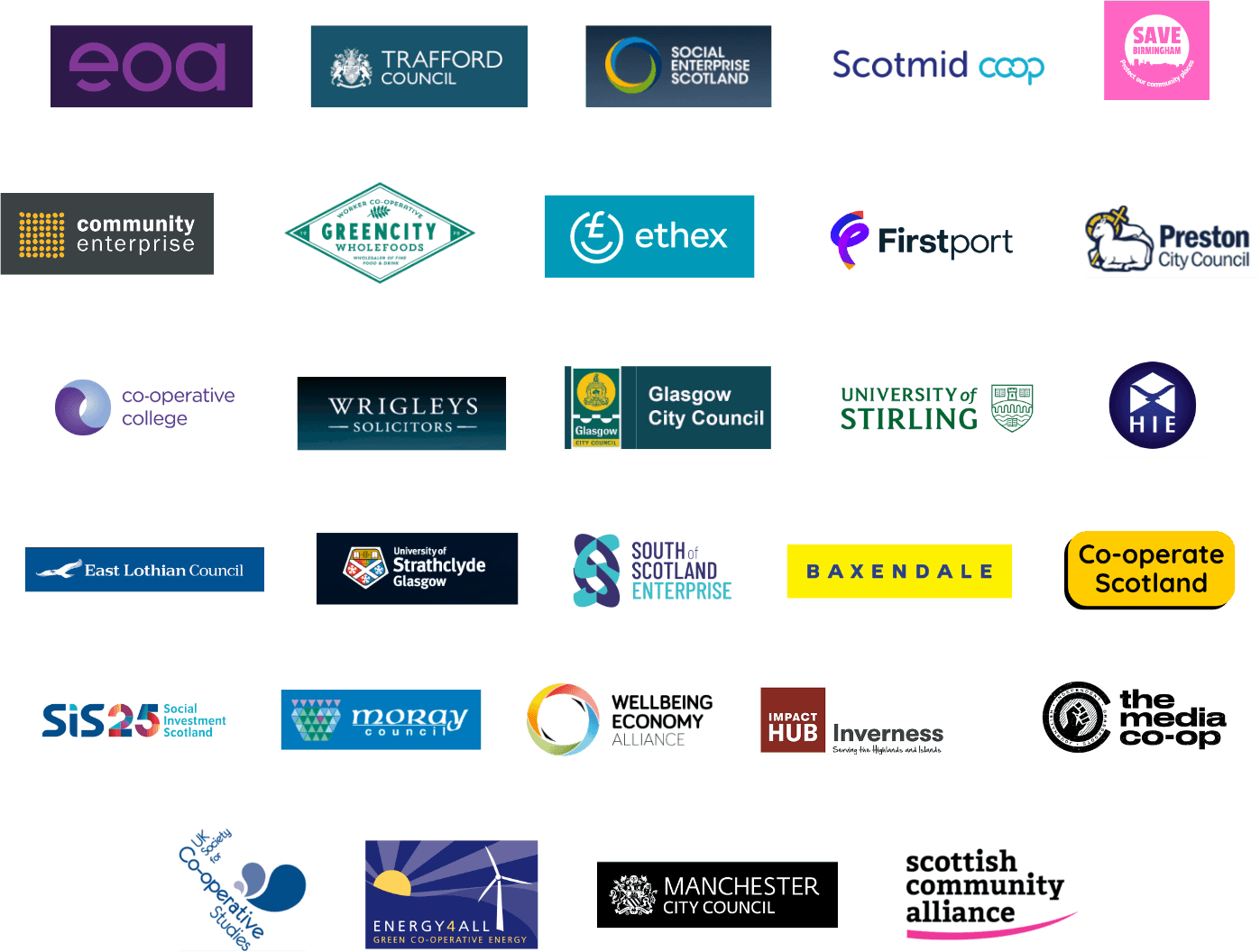
The event convened policy makers, businesses, federations, academics, and funders to develop and promote more awareness of democratic business, with representatives from a range of organisations including:
The event convened policy makers, businesses, federations, academics, and funders to develop and promote more awareness of democratic business, with representatives from a range of organisations including:
The event convened policy makers, businesses, federations, academics, and funders to develop and promote more awareness of democratic business, with representatives from a range of organisations including:
Read the full report
Read the full report
To access and download the full report in PDF format please fill in the form below:
To access and download the full report in PDF format please fill in the form below:
To access and download the full report in PDF format please fill in the form below: